
Caller ID is Ruining Your Sales: Here’s How to Fight Back
Caller ID issues are quietly undermining outbound sales efforts across industries. The worst part? It’s a silent killer. Most businesses blame their scripts or their reps, never realizing the call was doomed before it even rang.
If your team is struggling to connect with leads who just showed interest, the problem likely isn’t your timing or your pitch. It’s an identity crisis.
According to the Pew Research Center, 80% of Americans avoid answering calls from unknown numbers. This means even your best leads are likely ghosting you.
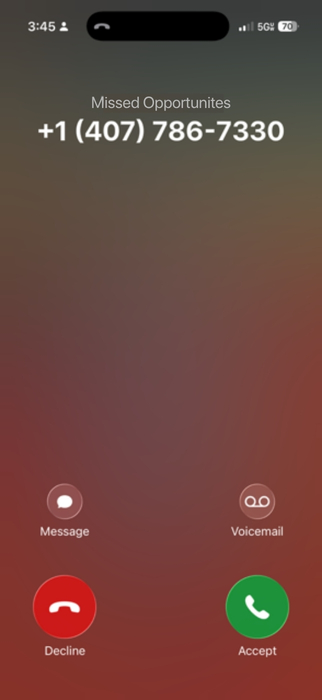
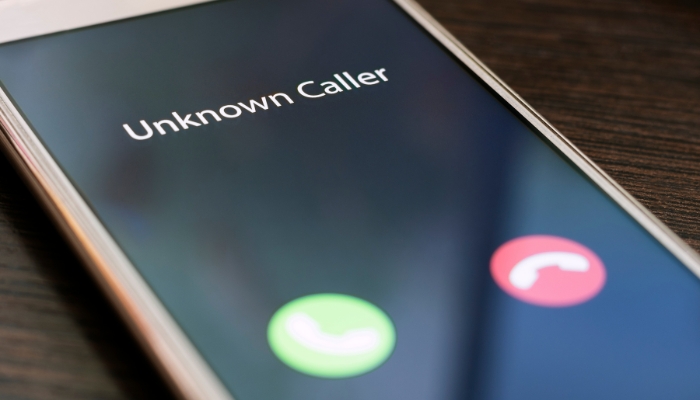
Think about the math: A prospect fills out your form and asks for a callback. Then, they let it ring because “Unknown Caller” or a random string of digits appears on their screen.
The lead was qualified. The timing was perfect. But you didn’t look like a solution to their problems. You looked like a spammer.
The Hidden Technical Gap
Most people assume that when they place a business call, their company name automatically “travels” with the signal. It doesn’t.
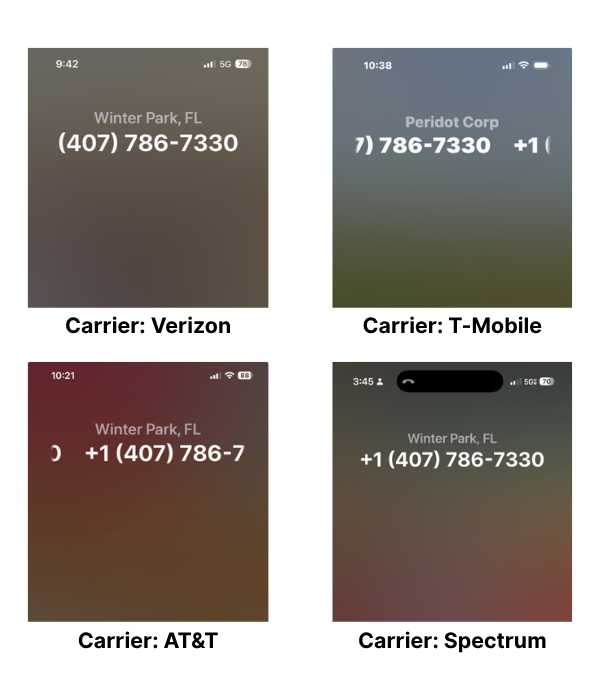
When you make an outbound call, only your 10-digit phone number is transmitted. Whether your business name appears depends entirely on the receiving carrier, and that’s where the system breaks down.
The Fragmentation Problem
Verizon, AT&T and T-Mobile each maintain their own proprietary databases to match phone numbers to business names. There is no “Universal Directory.”
- Inconsistency: Your name may show up perfectly on a T-Mobile handset but be completely absent on a Verizon device.
- The “Spam” Risk: Without a verified name, carrier algorithms are more likely to slap a “Potential Spam” label on your legitimate outreach.
- The Reputation Hit: If you haven’t actively claimed your identity, you are at the mercy of outdated third-party data.


Step 1: The 10-Minute Audit
You cannot fight back against a problem you haven’t measured. Perform this “Blind Test” to see exactly what your prospects see:
- Identify Carriers: Find team members who use different mobile carriers (Verizon, AT&T, T-Mobile).
- Clear Contacts: Ensure your business number is not saved in their phone’s contact list.
- Place the Call: Call each device directly from your outbound sales system.
- Document the Result: Note exactly what appears: A name, a number only or a “Spam” warning?
Step 2: Reclaim Your Identity
To win this fight, you must proactively “claim” your numbers across the network.
The most effective starting point is the Free Caller Registry. This is a centralized portal used by the major analytics engines (Hiya, First Orion and TNS) that provide data to the big carriers. Registering here helps ensure your business name is correctly associated with your numbers.
Pro Tip: If your organization uses multiple outbound numbers, you must register each one separately. A single registration will not cover your entire office.

Our Testing Revealed: Free Caller Registry Is Just Step One
When we ran our own Caller ID tests, we discovered a hard truth: simply registering with the Free Caller Registry to prove you aren’t spam is no longer enough.
Because mobile carriers frequently ignore traditional caller ID databases entirely, you have to secure your identity across multiple layers of modern telecom infrastructure.
To solve this for our own business, we mapped out a complete roadmap. If you want your business name to actually display on a prospect’s phone, you must execute a multi-layered strategy.
The Universal Outbound Identity Strategy
To ensure your business name shows up across all platforms, your strategy needs to hit these 5 distinct layers:
Unleash Your Website’s Potential with ROAR!
Are you ready to elevate your online presence? At ROAR! Internet Marketing, our Performance Based Digital Marketing Agency specializes in uncovering valuable insights that drive results. With over 17+ years of experience and expertise, we craft customized strategies personalized to your unique business needs.
Let us help you attract more leads and dominate your industry!


Essential Execution Rules
Regardless of your phone provider, you must follow these rules to keep your numbers clean:
- The 15-Character Constraint: Legacy CNAM databases require uppercase letters, and spaces count. (e.g., SPEC PIZZA CATER instead of The Spectacular Pizza Shop and Catering).
- Complete Business Verification First: Many modern providers won’t let you update your Caller ID until you complete your Know Your Business (KYB) or brand onboarding. Have your EIN and business address ready.
- Understand Number Limitations: Local area codes support standard CNAM best. Traditional caller ID display for toll-free numbers (800/888) is highly inconsistent on mobile networks, though newer branded-calling platforms are beginning to close this technical gap.
- Protect Your Operational Reputation: Algorithms flag calling behavior. To keep your numbers from being blacklisted, avoid aggressive redial patterns, remove disconnected numbers immediately and keep your call abandonment rates low.
Note: Even with perfect optimization, if a contact has manually saved your number in their phone under a custom name, their local address book will always override network settings.
The Bottom Line
In an era of rampant robocalls, trust begins before the “Hello.” Stop letting carrier algorithms dictate your connection rate. By auditing your numbers and claiming your identity, you remove the invisible wall between your sales team and your revenue.
Fix the recognition problem first. Everything else gets easier from there.

Categories
- AI Optimization
- Compliance
- Digital Marketing
- Email Spam
- Home Elevator Digital Marketing
- Home Elevators
- Home Generators
- Home Genrator Dealer Marketing
- Local Search
- Pest Control
- Pest Control Consumer Trends
- Pest Control Digital Agency
- Pest Control Marketing
- PPC
- Pressure Washing
- Pressure Washing Consumer Trends
- Pressure Washing Digital Agency
- Pressure Washing Marketing
- ROAR! Internet Marketing
- SEO
- Social Media
- Vein Clinic
- Vein Clinic Digital Marketing
- Web Design